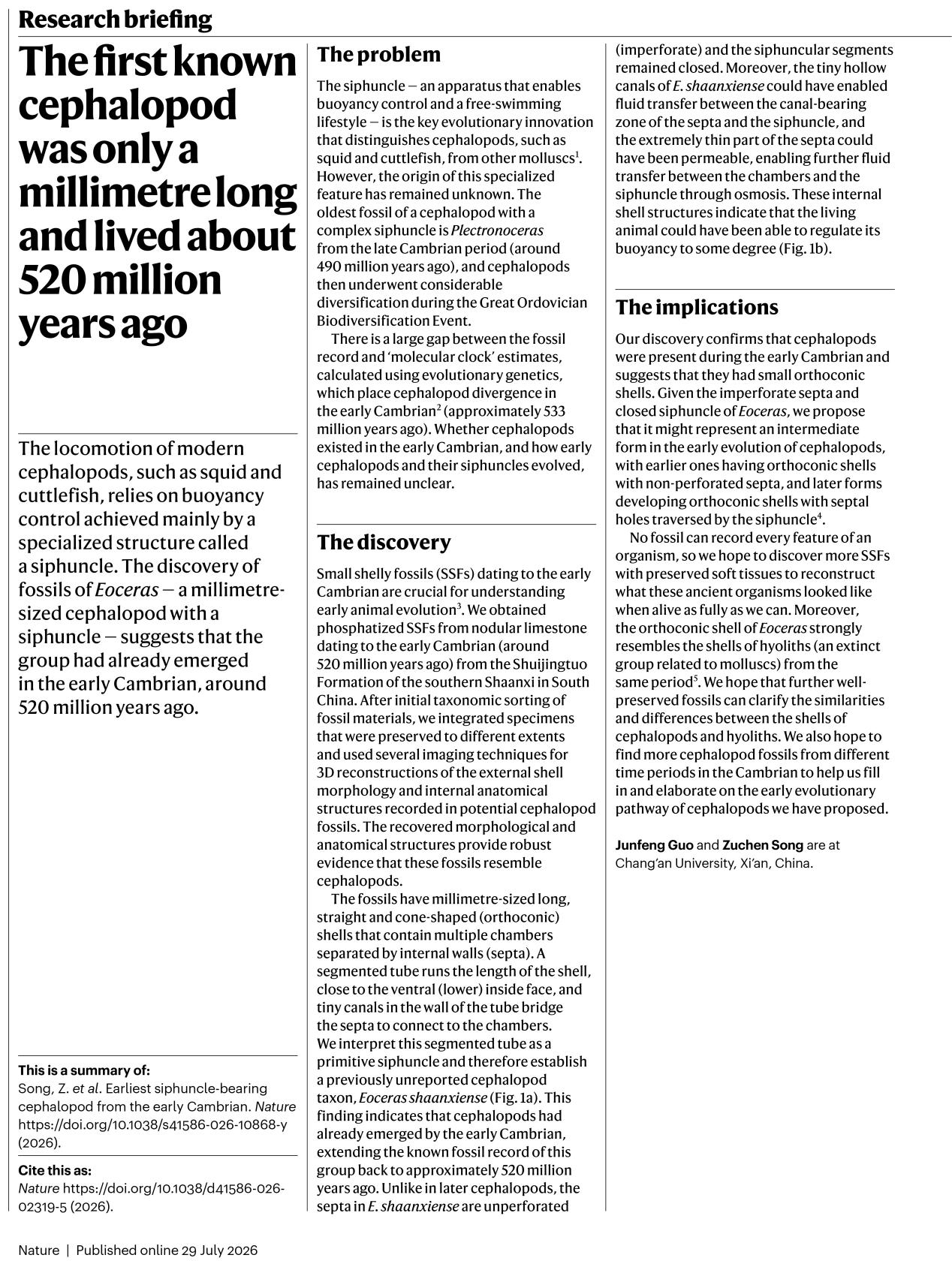
近日,国际顶级期刊《Nature》在线发表了我校资源学院郭俊锋教授和宋祖晨博士应编辑团队邀请撰写的《生活在5.2亿年前最古老的头足动物只有毫米大小》(The first known cephalopod was only a millimetre long and lived about 520 million years ago)Research Briefing文章,作者从科学问题、发现过程、启示意义和背后的故事等4个方面,以通俗易懂的方式深度解读了寒武纪早期最早具体管头足动物的发现历程、科学含义和潜在影响。
同时《Nature》编辑团队邀请了领域内权威专家和全程负责稿件处理的资深编辑对该项原创性研究工作开展了独立科学评价。
专家视野栏目中(Expert Opinion),美国迈阿密大学David Peterman教授高度评价了该项研究“作者使用成像技术来解析小型锥状化石中从未描述过的结构。这些结构被认为是原始的体管和隔壁,意味着这些壳体是由早期头足动物(而不是软舌螺)产生的。该项研究具有前沿性和引领性,将头足动物的首次出现前推了大约3000万”。(The authors use imaging techniques to resolve undescribed structures in small conical fossils. These structures are suggested to be primitive siphuncles and septa, which would imply that these shells were created by early cephalopods (rather than hyoliths). The work is topical and notable, pushing the first appearance of cephalopod fossils back by about 30 million years.)
编辑评述栏目中(From The Editor),《Nature》资深编辑Henry Gee博士给出了高度评价:来自中国寒武纪早期(约5.2亿年前)的始角石,拨开了头足动物起源的迷雾。标本显示壳体由体管连接的多个气室组成,体管是头足类动物用来调节每个气室的气体量的管状结构。始角石与更年轻(更大)的鹦鹉螺最为相似,它代表了头足动物最早成员。(The origins of cephalopod molluscs are obscure, but now less so thanks to Eoceras, a tiny fossil from the early Cambrian of China (about 520 million years ago). Examination of several specimens revealed a chambereds shell with the individual chambers linked by a siphuncle, a tube used by cephalopods to regulate the amount of gas in each chamber. Eoceras is most similar to younger (and larger) nautiloids and mark it out as the earliest member of its group.)
Nature Research Briefing栏目文章通常是编辑主导,每周精选 3–4 篇(仅限当期最具突破性的原创研究长文(Article)),通常具有广泛科普意义,且已被编辑认定为“亮点工作”的原创性论文进行配发。该文章由《Nature》编辑团队邀请原创论文的通讯作者或核心贡献者、领域专家和资深编辑共同撰写,旨在以通俗易懂的方式解读论文,让更多的读者更容易获得研究论文的科学意义。
论文链接:https://doi.org/10.1038/d41586-026-02319-5
(审稿:孟振江 网络编辑:和燕)